
Wedding Dress Hemming Process Explained
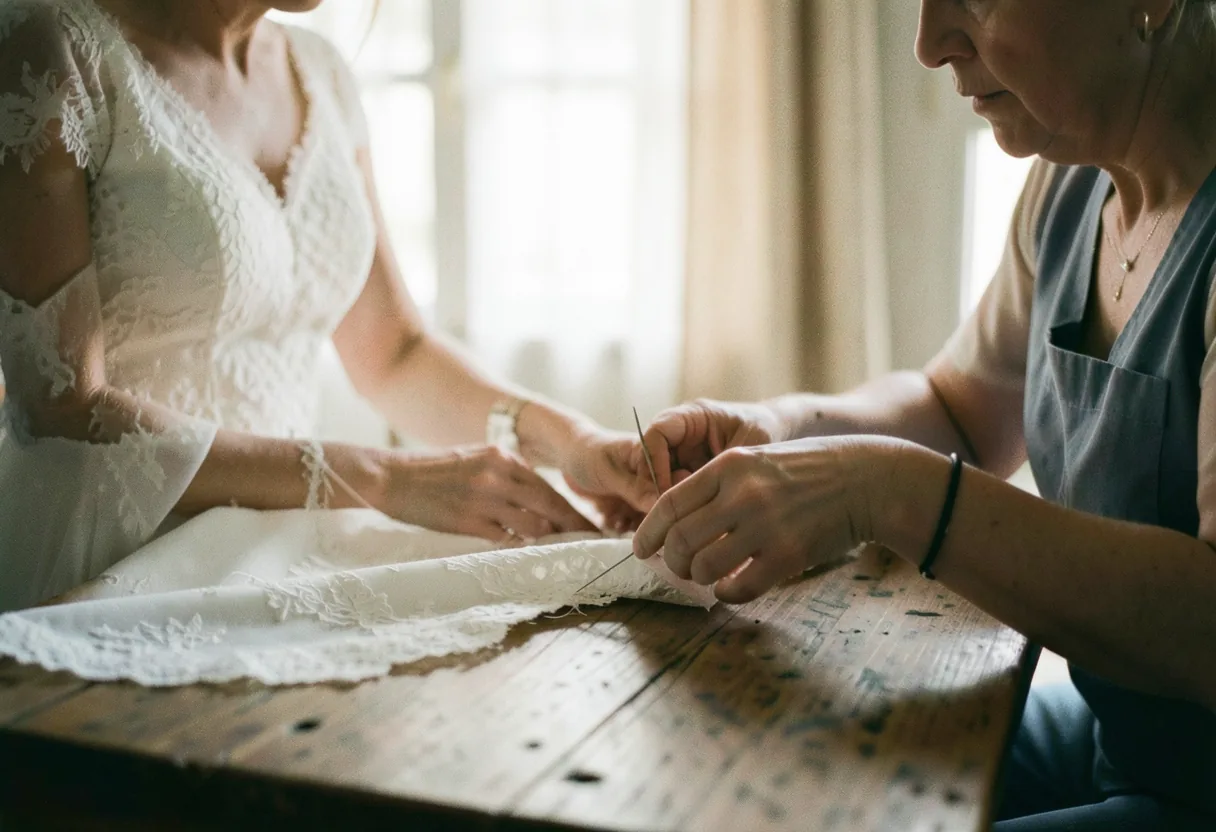
Wedding dress hemming begins with a fitting to determine the desired length. The seamstress marks the hemline with pins or chalk, ensuring symmetry. The dress is then turned inside out, and the excess fabric is cut, leaving a seam allowance. The hem is pressed and hand-stitched for a clean, invisible finish.
The wedding dress hemming process explained involves adjusting the length of your gown to ensure it fits perfectly for your big day, whether you’re shopping at bridal shops in Tamworth or elsewhere.
Think of hemming your wedding dress like tailoring a pair of trousers to the exact length of your legs, except with far more layers of tulle and the weight of your entire wedding day riding on it.
Key facts
- Hemming typically costs between £50 and £150, depending on the complexity of the fabric and design.
- The process usually takes 2-4 fittings to get the length just right.
- Professionals often use invisible zippers or hidden hems to maintain the dress’s aesthetic.
- It’s best to have your dress hemmed 4-6 weeks before the wedding to account for any last-minute adjustments.
Why wedding dress hemming is crucial
Hemming isn’t just about making your dress the right length, it’s about ensuring you can walk, dance, and move comfortably without tripping over your own gown. The first time I really looked at the hemming process, I was struck by how many tiny details go into it: the way the fabric falls, the way the hem needs to accommodate your shoes, and even how it might need to be adjusted if you plan to wear it without tights.
A poorly hemmed dress can ruin your wedding photos, limit your movement, and even cause accidents. For example, if the hem is too long, you risk stepping on it during your first dance, and if it’s too short, it might not flow as beautifully in photos. The goal is to create a hem that’s just right, one that lets you move freely while still looking flawless.
Many bridal shops in Tamworth, such as Evelyn Rose Bridal, offer expert hemming services, ensuring that your dress is adjusted with precision. These shops often have seamstresses who specialize in bridal wear, understanding the unique challenges of working with delicate fabrics and intricate designs.
How the wedding dress hemming process works
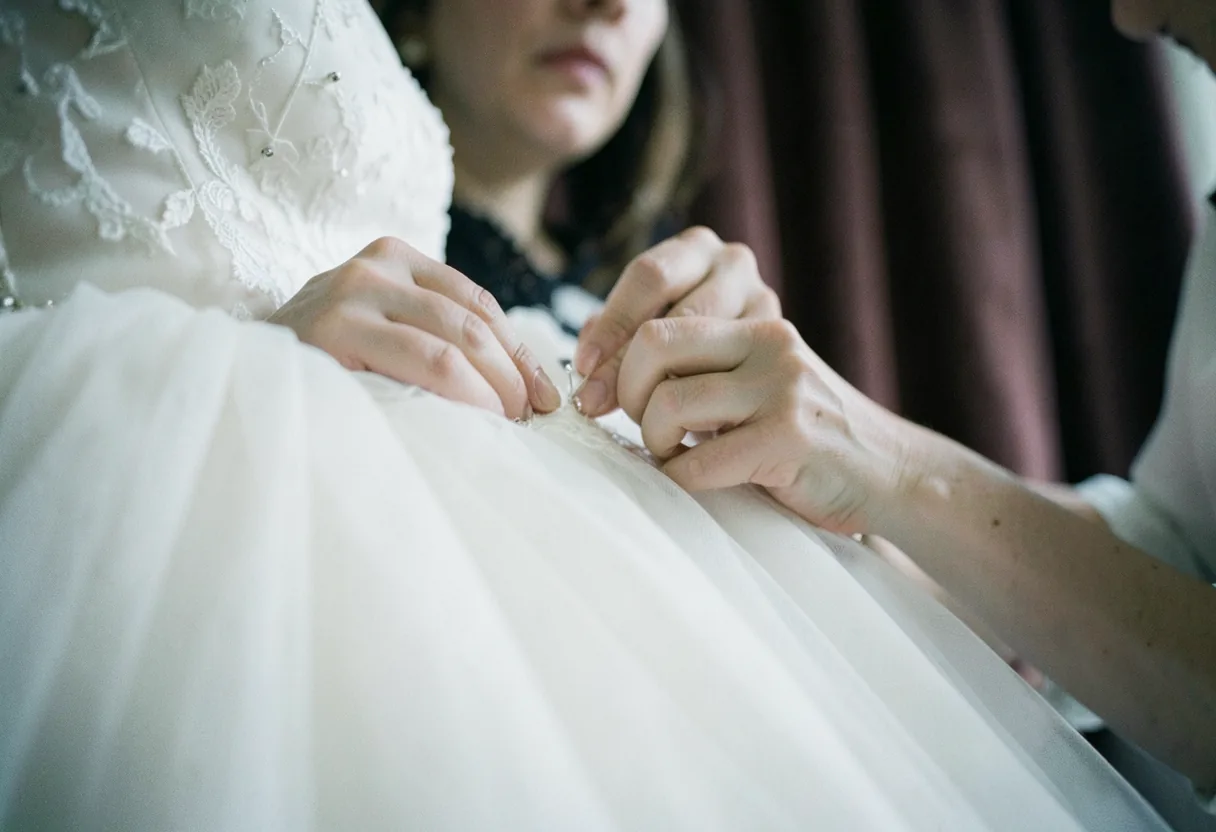
The wedding dress hemming process explained begins with an initial fitting, where the seamstress measures your dress’s current length and determines how much needs to be altered. This is where you’ll discuss your desired hemline, whether you want it to brush the floor, fall just above the ankle, or land at a specific point on your shoe. The seamstress will then mark the new hemline, often using pins or chalk, and temporarily baste the fabric in place to see how it looks and feels as you move.
Next, the seamstress will carefully cut off the excess fabric, taking care not to damage any delicate embroidery, beading, or lace. Once the fabric is cut, the new hem is sewn into place. Depending on the fabric, this might involve a simple hand-stitched hem, an invisible zipper, or a more intricate technique to ensure the hem lies flat and doesn’t show any stitching. Some dresses, especially those with layers of tulle or heavy skirts, may require additional support, such as a horsehair braid sewn into the hem to help it hold its shape.
After the hem is sewn, you’ll have a second fitting to check the length and make any final adjustments. This is your chance to walk around, sit down, and even practice dancing to ensure the hem doesn’t ride up or get caught on anything. If any tweaks are needed, the seamstress will make them before finalizing the hem. The entire process can take a few weeks, so it’s important to schedule your fittings well in advance of your wedding.
Where to find expert wedding dress hemming in Tamworth
Tamworth is home to several bridal shops that offer expert hemming services, from second-hand bridal shops to high-end designer boutiques. If you’re looking for affordable options, you might consider cheap bridal shops in Tamworth, which often provide quality alterations at a lower cost. For a more luxurious experience, designer bridal shops in Tamworth, such as Evelyn Rose Bridal, offer bespoke hemming services tailored to your specific dress and style.
For those shopping in the town centre, bridal shops in Tamworth town centre are a convenient choice, offering easy access and a variety of alteration services. If you’re looking for a more personalized experience, some shops, like Utopia’s NEW Location NOW OPEN!!, provide one-on-one consultations to ensure your dress is altered to perfection. Additionally, if you’re searching for mother of the bride shops near Tamworth, many of these stores also offer alterations for bridesmaids and mothers of the bride, making it a one-stop shop for all your wedding attire needs.
One standout option is Evelyn Rose Bridal, known for its stunning bridal wear and expert alteration services. Their team of seamstresses understands the intricacies of wedding dress hemming, ensuring that every bride leaves with a gown that fits like a glove. If you’re looking for a shop with a wide selection of wedding dresses and accessories, Evelyn Rose Bridal is a top choice, offering everything from the dress itself to the final hemming adjustments.
How much does wedding dress hemming cost?
The cost of wedding dress hemming can vary depending on the complexity of the dress, the fabric, and the expertise of the seamstress. On average, hemming a wedding dress costs between £50 and £150, but prices can go higher for more intricate designs or luxurious fabrics. For example, a dress with multiple layers of tulle or delicate lacework may require more time and skill to hem properly, increasing the cost.
To give you a better idea of the pricing structure, here’s a general breakdown of what you can expect:
Keep in mind that these are just estimates, and the final cost may vary depending on the shop and the seamstress’s expertise. It’s always a good idea to get a quote from your chosen bridal shop before committing to any alterations. Additionally, some shops may offer package deals that include hemming as part of a larger alteration service, which can help you save money in the long run.
When to schedule your wedding dress hemming
Scheduling your wedding dress hemming at the right time is crucial to ensuring that you have enough time for any necessary adjustments. Generally, it’s recommended to have your first hemming fitting about 4-6 weeks before your wedding. This gives you enough time to make any final tweaks and ensures that your dress is ready well in advance of the big day.
However, the exact timing can depend on a few factors, such as how soon you receive your dress and whether you need any additional alterations. If you’re buying your dress from a bridal shop in Tamworth, they can often guide you on the best timeline for hemming based on their experience. For example, if you’re ordering a custom dress, it may take longer to arrive, so you’ll want to schedule your fittings accordingly.
Here’s a general timeline to help you plan:
- Receive your dress: As soon as your dress arrives, take it to your chosen bridal shop for an initial consultation.
- First fitting: Schedule your first hemming fitting about 6-8 weeks before your wedding. This gives you enough time to make adjustments if needed.
- Second fitting: About 4 weeks before your wedding, have your second fitting to check the length and make any final tweaks.
- Final alterations: If any additional adjustments are needed, schedule them at least 2 weeks before your wedding to ensure everything is perfect.
By following this timeline, you can ensure that your dress is altered to perfection and ready for your big day.
Tips for a perfect wedding dress hem
Achieving the perfect wedding dress hem requires more than just finding a skilled seamstress, it also involves understanding what you want and communicating clearly with your alterations expert. Here are some tips to help you get the best results:
- Choose the right shoes: Always bring the shoes you plan to wear on your wedding day to your fittings. The height and style of your shoes can significantly impact the length of your dress.
- Consider your venue: Think about the surfaces you’ll be walking on, sand, grass, or a hardwood floor, and how they might affect the length of your dress. A seamstress can adjust the hem to account for these factors.
- Practice moving: During your fittings, practice walking, sitting, and dancing to ensure the hem doesn’t ride up or get caught on anything. This is especially important for dresses with long trains or multiple layers.
- Communicate clearly: Be specific about what you want, whether it’s a slight adjustment or a more dramatic change. The more details you provide, the better your seamstress can tailor the hem to your needs.
What to look for in a Tamworth bridal shop for hemming
When choosing a bridal shop in Tamworth for your wedding dress hemming, there are a few key factors to consider. First and foremost, look for a shop with experienced seamstresses who specialize in bridal wear. These professionals understand the unique challenges of working with delicate fabrics and intricate designs, ensuring that your dress is altered with precision.
Additionally, consider the shop’s reputation and reviews. Look for bridal shops in Tamworth with positive feedback from previous customers, as this can give you confidence in their expertise. For example, Evelyn Rose Bridal is known for its stunning bridal wear and expert alteration services, making it a top choice for many brides in the area.
Another factor to consider is the shop’s location and availability. If you’re looking for bridal shops in Tamworth town centre, you’ll have easy access to a variety of alteration services. However, if you prefer a more personalized experience, some shops, like Utopia’s NEW Location NOW OPEN!!, offer one-on-one consultations to ensure your dress is altered to perfection. Additionally, if you’re searching for mother of the bride shops near Tamworth, many of these stores also offer alterations for bridesmaids and mothers of the bride, making it a convenient choice for all your wedding attire needs.
Final thoughts
The wedding dress hemming process explained is a crucial step in ensuring your gown fits perfectly for your big day. By understanding the process, choosing the right bridal shop in Tamworth, and following these tips, you can achieve a flawless hem that lets you move freely and look stunning in your wedding photos. Don’t wait until the last minute, schedule your fittings well in advance and communicate clearly with your seamstress to get the best results. Your wedding day is a once-in-a-lifetime event, and a perfectly hemmed dress will help you feel confident and beautiful as you walk down the aisle.
Frequently asked questions
How far in advance should I plan for wedding dress hemming?
Schedule your first fitting at least 3-4 weeks before the wedding. This gives time for adjustments, especially if the hem needs multiple alterations. The final fitting should be 1-2 weeks before the big day, ensuring the dress is perfect for walking and dancing.
What is the difference between a sweep train and a court train?
A sweep train is short, typically 6-12 inches long, and allows for easy movement. A court train is longer, often extending several feet, requiring careful hemming to avoid tripping. The choice depends on your wedding style and venue.
Can I hem my wedding dress at home?
Hemming at home is risky. Professional seamstresses use techniques like blind hemming or horsehair braid to create a smooth finish. Mistakes in fabric handling or stitching can ruin the dress. For most brides, a professional alteration service is worth the investment.
How does the type of fabric affect the hemming process?
Silk or satin requires precise, invisible stitches to avoid snagging. Tulle or organza may need horsehair braid for volume. Heavy fabrics like brocade need reinforced hems to support the weight. The seamstress will choose techniques based on the fabric's weight and texture.